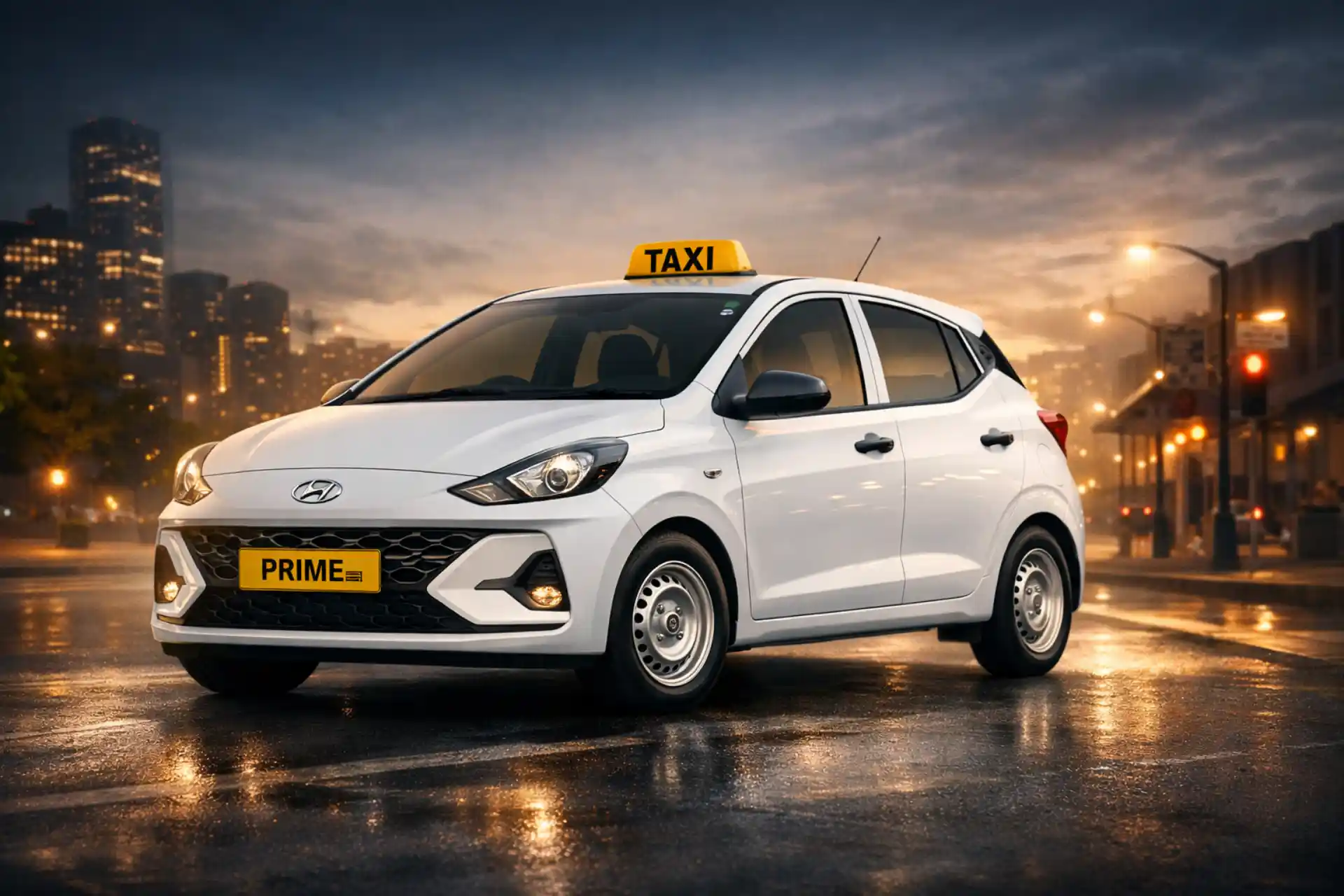
Hyundai just made its first real play for India’s commercial vehicle market. The company launched two purpose-built taxi variants called Prime HB and Prime SD, based on the Grand i10 Nios hatchback and Aura sedan. Prices start at Rs. 5.99 lakh and Rs. 6.89 lakh respectively, ex-showroom.
These aren’t just regular cars with taxi badges slapped on. Hyundai designed them specifically for fleet operators who need predictable costs and minimal downtime.
Also read: Tata to Maruti: 5 New SUVs Launching in January You Can’t Miss
What Makes Them Different
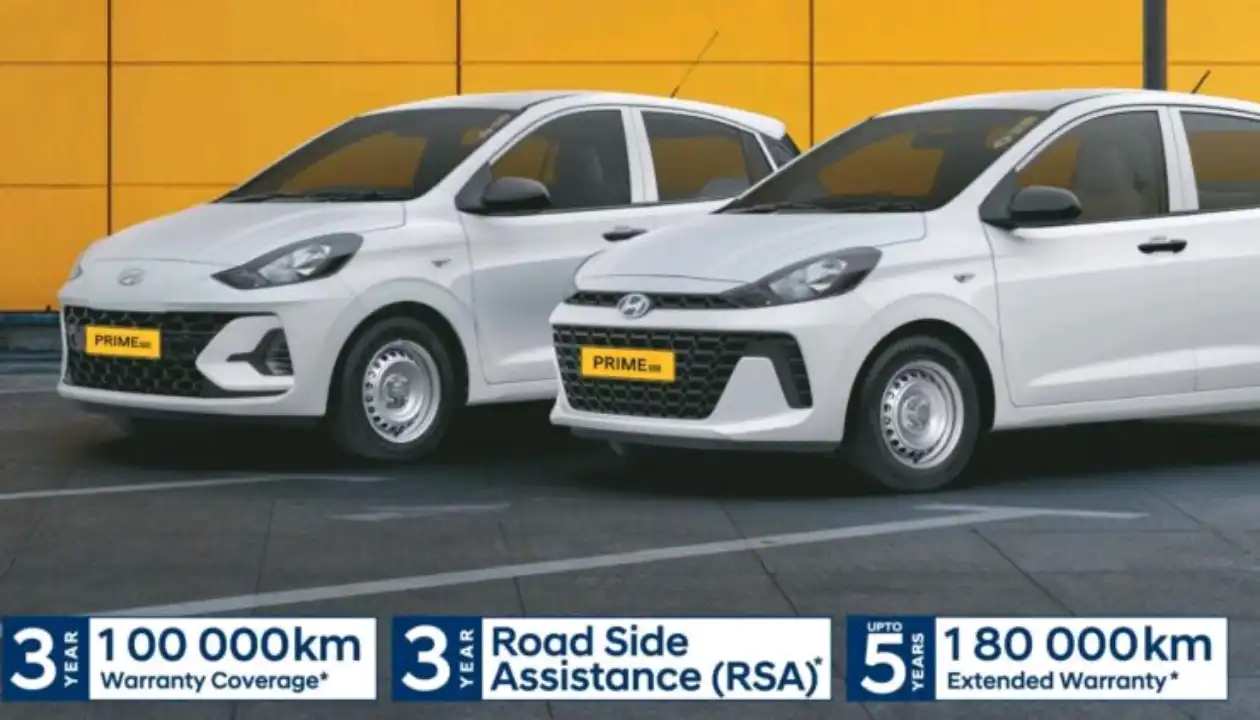
Both models come with factory-fitted CNG setups paired to Hyundai’s 1.2-litre Kappa petrol engine. The Prime SD claims 28.40 km per kg on CNG, while the Prime HB returns 27.32 km per kg. Hyundai says running costs work out to just 47 paise per kilometer, which matters when you’re clocking 200 or 300 km daily.
There’s also a speed limiter built in, capped at 80 kmph. That’s not a penalty. It’s a requirement for commercial vehicles in India, and Hyundai baked it into the car from the factory. No retrofitting needed.
What’s interesting here is the feature list. Six airbags come standard. So do rear AC vents, power windows front and back, rear parking sensors, and three-point seatbelts for all passengers. You also get height-adjustable seats, steering-mounted audio controls, footwell lighting, and Type-C fast charging ports.
That’s unusual. Most budget commercial vehicles strip out comfort and safety to hit a price point. Hyundai kept them in.
Also read: These 5 Maruti Suzuki Budget Cars Are Coming soon
Optional Add-Ons Worth Noting
If you want more, there are optional accessories. A 9-inch touchscreen with wireless Android Auto and Apple CarPlay is available. So is a rear camera and a vehicle tracking device with four panic buttons. The panic button setup is clearly aimed at app-based taxi services where driver and passenger safety is under scrutiny.
Why This Matters Now
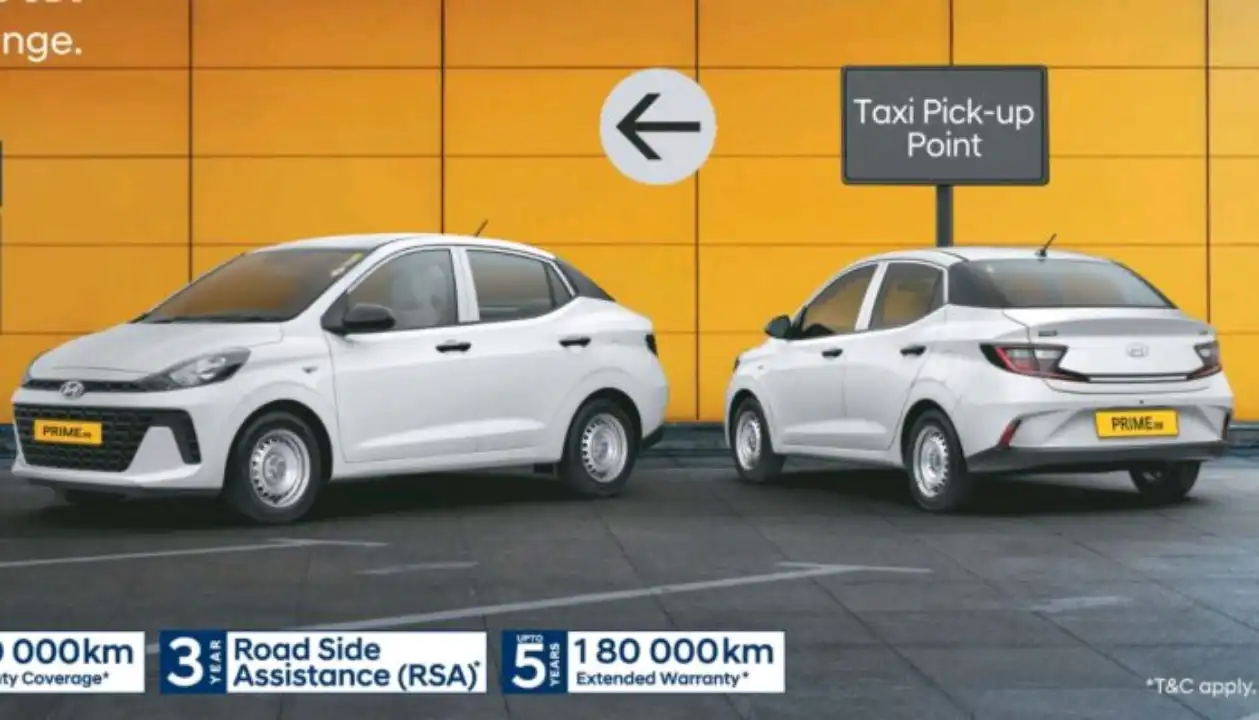
India’s commercial mobility space is messy. Maruti dominates with the Tour variants of the Alto, WagonR, and Dzire. Tata has the Tigor EV for some fleets. But most operators are working with older, less efficient cars that weren’t designed for taxi duty from day one.
Hyundai’s entry signals something bigger. The ride-hailing market is maturing. Operators want better residual value, lower maintenance, and features that help retain drivers and keep customers happy. A car with six airbags and rear AC isn’t just safer or more comfortable. It’s easier to sell when you’re competing for drivers who have options.
The CNG focus also makes sense. Petrol is expensive. Electric infrastructure is patchy outside metros. CNG is the middle ground, especially for operators running 24/7 shifts where charging downtime isn’t an option.
Also read: Tata Avinya EV: Premium Electric SUVs Coming in 2026
What Hyundai Is Offering Beyond the Car
Hyundai isn’t just selling vehicles. There’s an extended warranty that goes up to five years or 1,80,000 km. Financing stretches to 72 months, which lowers monthly payments. And they’re putting trained Fleet Care Advisors at dealerships to handle bulk orders and maintenance schedules.
That support structure matters more than the car itself for many fleet owners. A reliable service network can make or break a commercial vehicle.
Also read: Why Kia is Betting on the Sorento Hybrid for India in 2026
Who Should Consider This
If you’re running a small to mid-sized fleet, these make sense. The upfront cost is higher than a basic Maruti Tour model, but the feature set and warranty coverage could offset that over time. For app-based drivers who own their cars, the safety and comfort upgrades might justify the price, especially if you’re working long hours.
If you’re chasing the absolute lowest purchase price, this won’t be it. Hyundai is betting that operators will pay a bit more for a better ownership experience.
Bookings are open now for Rs. 5,000. You can pick from three colors: Atlas White, Typhoon Silver, or Abyss Black. Deliveries should begin soon across Hyundai’s dealer network.
This isn’t a revolution, but it’s a smart entry into a segment Hyundai hasn’t touched before. And if the product holds up in real-world taxi use, it could shift expectations for what a commercial vehicle should offer.
Most auto news is noise. TechAutoHub filters it down to what actually matters for Indian car buyers. Follow us if you want the signal, not the static.

Monojit Paul is the founder and editor of techautohub.com. He covers India’s automotive industry, focusing on new launches, cars, bikes, and market trends.